
Chapter 1 - Advocacy
From City Hall to Capitol Hill: How Policy Gets Made
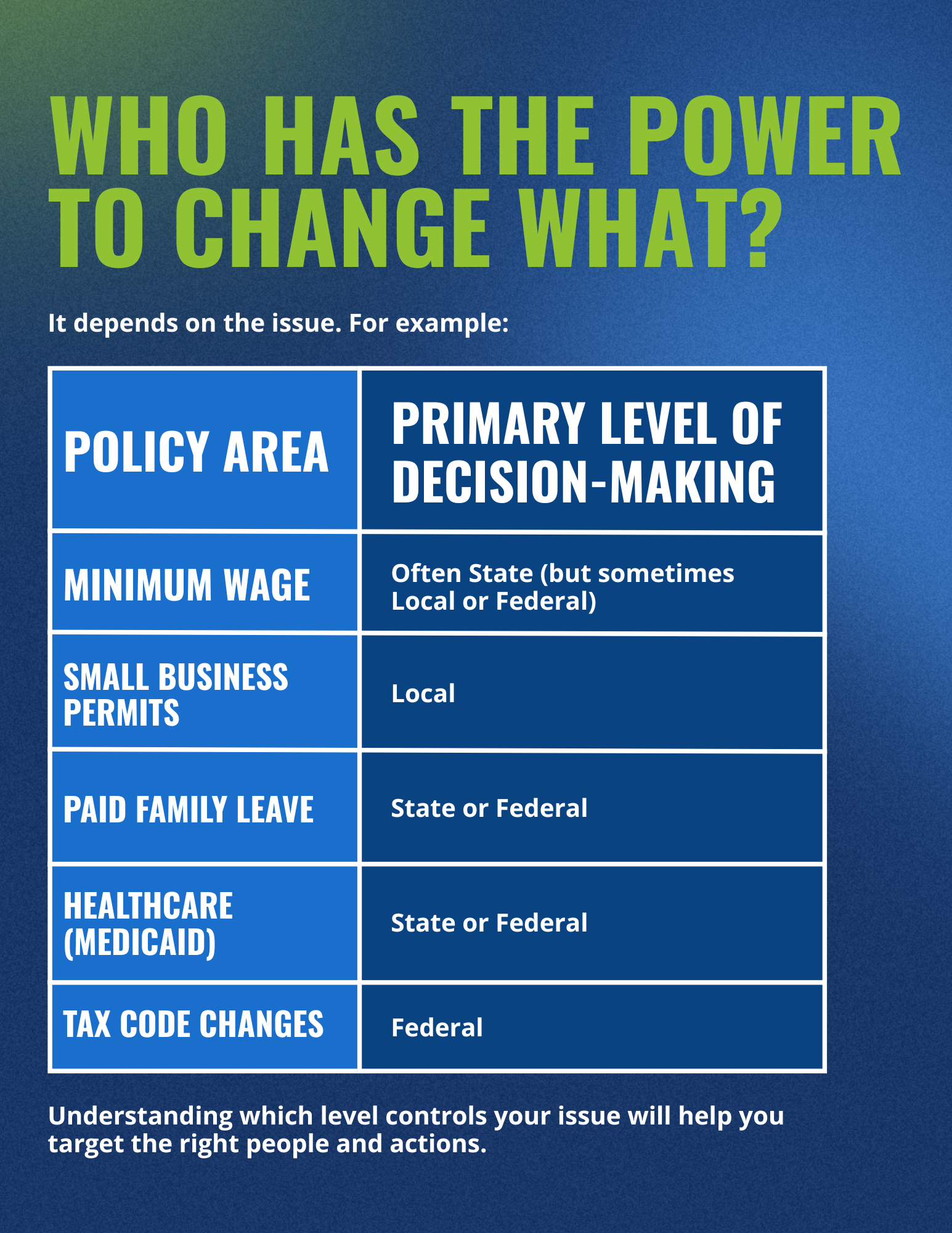
Policy change happens at every level of government — from local school boards to federal agencies. To be an effective advocate, you need to understand where decisions get made, who makes them, and how to engage at the right level.
Advocacy is about influencing public policy — the laws, budgets, and rules that shape our lives. But not all decisions are made in Washington, D.C. In fact, many of the issues that affect us most — housing, transit, policing, public health — are decided closer to home.
Local
City councils, mayors, school boards, county commissions
Make decisions about zoning, business permits, policing, schools, and more
State
Governors, state legislatures, state agencies
Handle issues like taxes, healthcare access, labor laws, transportation, and education funding
Federal
Congress, the President, federal agencies (like the IRS or EPA)
Pass nationwide laws and oversee national programs
Levels of Government
How a Bill Becomes a Law (Short Version)
Someone drafts a bill (usually a lawmaker)
It’s introduced and sent to committee
If it survives committee, it goes to a vote
If it passes, it moves to the other chamber (e.g., House → Senate)
If both chambers approve, it’s signed into law by the executive (Governor or President)
Then it gets implemented — often with additional rules set by agencies
As advocates, we can influence this process at every stage — by shaping the bill, supporting or opposing it, offering testimony, mobilizing constituents, or demanding implementation.
Strategic Tip
Don’t skip local or state advocacy!
State policies often become national ones. Local actions can create momentum. Some of the most powerful wins in U.S. history started in cities and states.